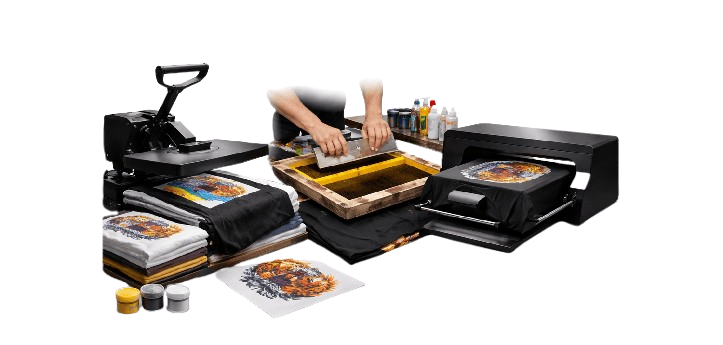
Selecting the right printing method is one of the most strategic decisions you’ll make when producing branded apparel, merchandise, or promotional products. The technique you choose directly influences print quality, durability, cost efficiency, and ultimately how your brand is perceived by customers.
With rapid advancements in printing technology and the growing demand for customization, understanding the strengths and limitations of each method is essential. This guide provides a deep, professional breakdown to help you make the most informed decision for your brand in 2026.
Your printing method impacts:
Durability — resistance to washing, cracking, fading, and abrasion
Visual Quality — color accuracy, vibrancy, gradients, and fine detail
Cost Efficiency — especially when comparing small vs. large production runs
Material Compatibility — cotton, polyester, blends, performance fabrics
Brand Perception — premium vs. budget look and feel
Scalability — ability to reproduce consistent results at volume
Choosing the wrong method can lead to premature wear, increased returns, and higher long‑term production costs.
1. Order Quantity & Scalability
Different methods excel at different volumes:
| Volume | Best Methods | Why |
|---|---|---|
| 1–50 pcs | DTF, DTG | No setup cost, fast turnaround |
| 50–300 pcs | DTF, Screen Printing (depending on design) | Balance of cost and quality |
| 300+ pcs | Screen Printing | Setup cost is amortized, lowest cost per unit |
Not all printing methods are created equal.
Choosing the wrong one can lead to:
• Fading prints after few washes
• Cracking or peeling designs
• Higher costs for bulk orders
• Poor brand impression
Choosing the right method ensures:
• Long-lasting quality
• Professional brand image
• Cost efficiency
• Better customer experience
2. Fabric Composition
Fabric type determines print adhesion, color accuracy, and longevity.
• 100% Cotton: DTG, DTF, Screen Printing
• Polyester: Sublimation, DTF
• Blends: DTF performs best; DTG may vary
• Performance/Sports Fabrics: Sublimation is ideal
Using the wrong method for the fabric can cause fading, bleeding, or poor wash resistance.
3. Design Complexity
Your artwork dictates the most suitable printing technology.
High-detail, gradients, photo-realistic designs: DTG or DTF
Solid colors, bold shapes, minimalistic logos: Screen Printing or Vinyl
Full-surface or all-over prints: Sublimation
4. Durability Requirements
Consider the product’s intended use:
• Workwear & uniforms: DTF or Screen Printing
• Sportswear: Sublimation
• Short-term events: Vinyl or economical DTF
• Retail fashion: DTG or high-quality DTF
5. Turnaround Time
• Fast production: DTF, DTG
• Long setup but fast bulk output: Screen Printing
• Specialized production: Sublimation
DTF has become one of the most versatile and reliable printing technologies in 2026.
Excellent adhesion on cotton, polyester, blends, and performance fabrics
High durability with strong resistance to cracking and peeling
Vibrant colors and sharp detail
No pre-treatment required
Ideal for small to medium runs
Limitations
• Slightly heavier print feel compared to DTG
• Requires precise heat-pressing for maximum longevity
A long-standing industry standard for high-volume production.
Technical Advantages
• Extremely durable ink layers
• Cost-effective for large batches
• Vibrant, long-lasting colors
• Works well on most fabrics
Limitations
• High setup cost per design
• Not ideal for detailed or multi-color artwork
• Inefficient for small orders
A premium digital method for high-resolution prints.
Technical Advantages
• Exceptional detail and color gradients
• Soft, breathable print feel
• Perfect for photographic designs
• Ideal for fashion and retail brands
Limitations
• Best performance on 100% cotton
• Higher cost per unit
• Not ideal for bulk production
A durable method for simple, bold designs.
Technical Advantages
• Crisp edges and strong opacity
• Excellent for names, numbers, and logos
• Works on various fabrics
Limitations
Not suitable for detailed or multi-color artwork
Layering increases thickness
Limited scalability
A dye-based method where ink becomes part of the fabric.
Technical Advantages
• Zero cracking or peeling
• Lightweight, breathable finish
• Ideal for sportswear and all-over prints
Limitations
• Only works on polyester
• Requires light-colored garments
Comparative Summary (2026)
| Factor | DTF | Screen | DTG | Vinyl | Sublimation |
|---|---|---|---|---|---|
| Fabric Flexibility | High | Medium | Low | Medium | Low |
| Detail Level | High | Medium | Very High | Low | High |
| Durability | High | Very High | Medium | High | Very High |
| Cost (Small Qty) | Low | High | Medium | Medium | Medium |
| Cost (Bulk) | Medium | Low | High | Medium | Medium |
Use this quick approach:
• Need flexibility + no MOQ? → DTF
• Printing 500+ pieces? → Screen printing
• Photo-quality design? → DTG
• Simple logo or numbering? → Vinyl
• Polyester sportswear? → Sublimation
• Corporate uniforms: DTF / Screen Printing
• Events & promotions: DTF (fast turnaround, low MOQ)
• Sportswear: Sublimation
• Retail fashion brands: DTG / DTF
• Industrial workwear: Screen Printing
• Corporate uniforms: DTF / Screen printing
• Events & promotions: DTF (fast turnaround)
• Sportswear: Sublimation
• Retail fashion brands: DTG / DTF
• Industrial workwear: Screen printing
There is no universal “best” printing method — only the method that best aligns with your:
• Quantity
• Fabric type
• Design complexity
• Budget
• End-use requirements
By understanding the strengths of each technology, brands can achieve superior print quality, long-lasting durability, and cost-effective production.

Golden Point Advertising LLC, founded in 2002, is a leading brand company in Dubai specializing in digital printing, signage, and branding solutions, delivering premium, customized services to maximize brand visibility and business impact.